

Why is Fitness Important in the Workplace?
Whether employees are battling sedentary behavior in an office setting or working to avoid injuries on a physically demanding job site, maintaining physical well-being plays a direct role in quality of life, and ultimately, a business’s bottom line. Regular movement supports physical health, mental clarity, and emotional resilience, all of which influence how employees show up at work each day.
Across the board, employees’ number one barrier to exercise is time. Competing priorities, commutes, family responsibilities, and work expectations make it seemingly impossible to hit the pavement for a run, or pick up those dusty weights. Even employees who value fitness can struggle with consistency when time and energy are limited.
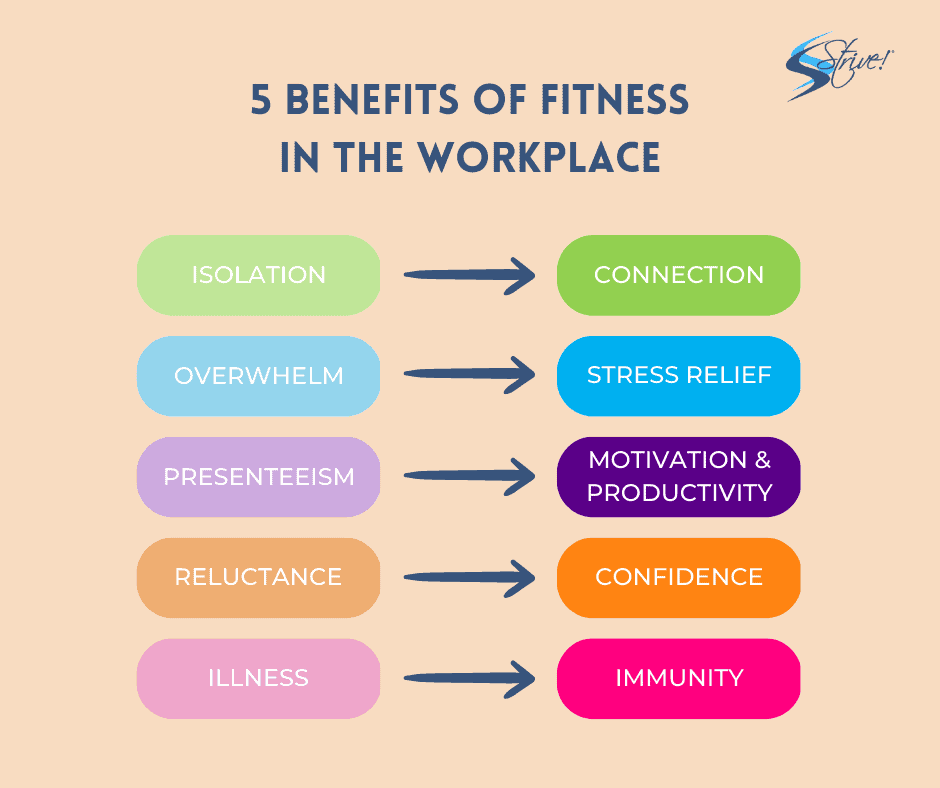
Some organizations have the resources to offer onsite gym facilities or instructor-led fitness classes, creating built-in opportunities for movement during the workday. Others take a more flexible approach, encouraging employees to use on-the-clock time to walk, stretch, or reset through guided movement. Whether onsite or virtual, these initiatives help employees operate at their full potential — physically and mentally. Let’s explore why fitness is important in the workplace by looking at five main benefits.
5 Benefits of Health & Fitness in the Workplace
In this post:
Connection
Like playing on a sports team, participating in group fitness classes naturally bonds people together as they overcome challenges and celebrate progress — both individually and collectively. In the workplace, group physical activity encourages healthy communication, shared accountability, mutual support, and even authentic friendships.
These relationships often form outside of traditional work roles and hierarchies, which helps employees relate to one another more openly and collaboratively. Over time, that sense of connection carries into the workplace, improving teamwork, easing conflict resolution, and strengthening organizational culture.
Because social connection is such a critical driver of engagement, many organizations prioritize live, instructor-led experiences rather than relying solely on recorded content. Real-time interaction can be more effective for building community and accountability.
Stress Relief
There’s no better place to proactively reduce stress than the workplace, where much of it originates. Regular exercise has been proven to lower blood pressure, reduce cholesterol, and decrease cortisol, the body’s primary stress hormone. When employees move their bodies consistently, they’re better equipped to manage daily stressors both at work and at home.
Beyond the physiological benefits, fitness releases mood-boosting endorphins that help the mind relax and reset. Many employees report feeling calmer, more focused, and more energized after exercising, which directly supports productivity and reduces burnout risk.
Yoga has become a particularly effective option for stress management because it combines movement, breathwork, and mindfulness. Many organizations are turning to virtual yoga to make stress relief more accessible across locations and schedules.
If you’re evaluating corporate yoga providers, check out these best-in-class options, and if you’re a San Diego local, we’ve got options for you, too.
Motivation & Productivity
Providing fitness opportunities in the workplace allows employees to practice self-discipline while experiencing measurable improvements in cognitive and emotional health. Movement increases blood flow to the brain, supports executive function, and enhances focus and problem-solving ability.
Employees who engage in regular physical activity often experience:
- A more positive outlook and attitude
- Improved emotional balance
- Increased energy throughout the day
- Better sleep quality
- Improved concentration and mental clarity
- Enhanced memory and creativity
Organizations exploring corporate fitness partnerships could benefit from reviewing some leading providers. San Diego folks — you’ve got your own list here.
Confidence
When employers invest in workplace fitness, they also invest in employees’ confidence and intrinsic motivation. Exercise reinforces the belief that challenges can be overcome and goals can be achieved, both physically and mentally.
As employees build strength, endurance, or flexibility, they also build self-trust. They learn the value of consistency and experience firsthand that progress is possible, even when it requires effort and patience.
In the workplace, this confidence shows up as stronger initiative, greater resilience, and a willingness to collaborate, mentor others, and tackle complex problems without giving up easily.
Immunity
Providing opportunities for fitness in the workplace has become a savvy, and increasingly necessary, business strategy. Regular exercise reduces the risk of chronic conditions such as heart disease, diabetes, asthma, chronic pain, and certain types of cancer, helping to lower healthcare costs and reduce extended periods of medical leave.
Exercise also strengthens the immune system by improving circulation and helping flush bacteria from the lungs and airways. Healthier employees are more resilient and miss fewer days of work, which is especially impactful during periods of heightened contagion, such as flu season.
Strive Onsite & Virtual Fitness in the Workplace
Wellness programs reduce healthcare costs, improve overall well-being, and increase productivity. Strive supports organizations through a full spectrum of fitness solutions, from the staffing and management of onsite corporate fitness centers to onsite and virtual group fitness classes across modalities such as HIIT, yoga, strength training, and Zumba.
With more than 15 years of experience, Strive takes a customized approach to implementing sustainable cultures of fitness and wellness in the workplace. To explore what’s possible for your organization, book a discovery call with a Strive wellness expert.

Fitness Programs
Fitness Programs

Nutrition Programs
Nutrition Programs

Onsite & Virtual Stretching Classes
Onsite & Virtual Stretching Classes